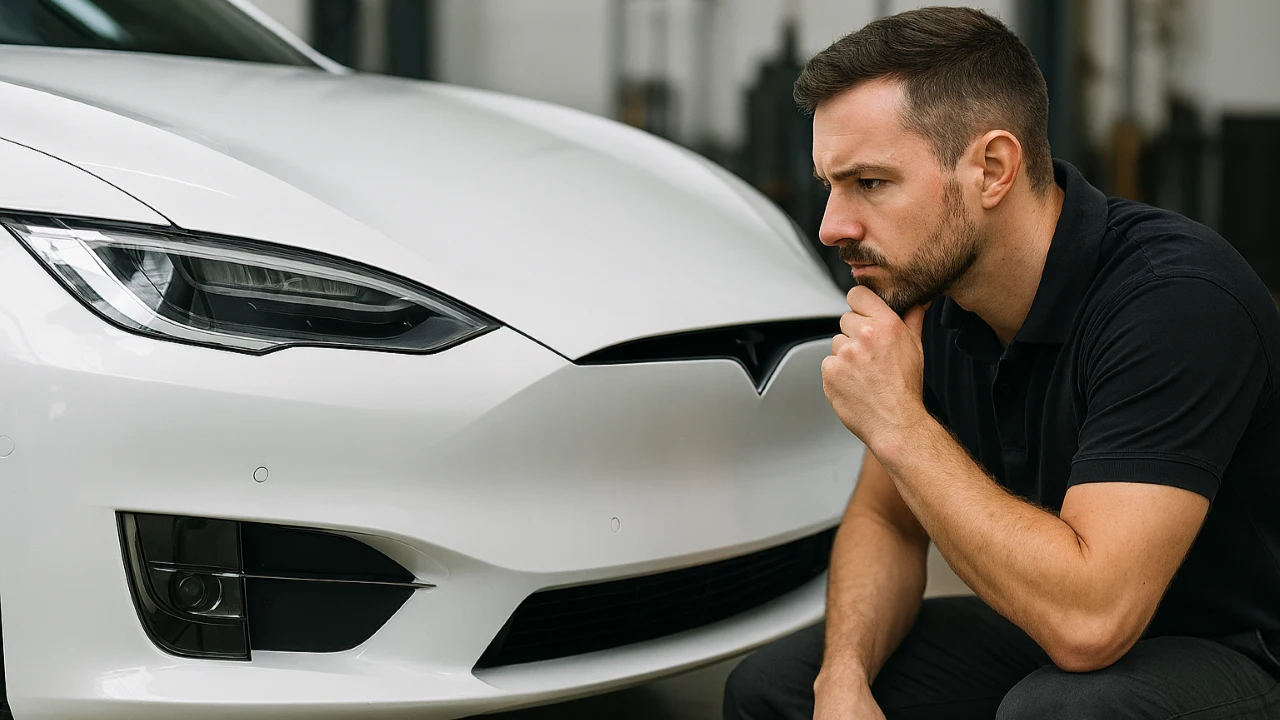
Is PDR Safe for Electric Vehicles?
Paintless Dent Repair is safe for electric vehicles because the process doesn’t use heat, cutting, or electrical contact. The only consideration is ADAS sensor alignment, which can shift if a panel isn’t stabilized before work begins. With proper technique, PDR poses no risk to EV batteries or electronics.
🔹Why EVs Require More Awareness (Not More Risk)
Electric vehicles use a network of sensors to support assisted‑driving and self‑driving features. These sensors are extremely precise, and even small changes in panel alignment can affect their calibration. PDR doesn’t interfere with electronics — but poor panel handling can.
🔸 Key EV Sensor Systems
- Radar modules
- Cameras
- Ultrasonic sensors
- ADAS alignment points
- Proximity and parking sensors
These systems depend on stable mounting surfaces. If the metal behind them shifts, the sensor can go offline.
🔹Where EV Sensors Are Commonly Located
Most EV sensors aren’t inside the dented panel — they’re mounted to metal brackets behind bumpers or structural points. Knowing where they live helps a technician avoid unnecessary disassembly or panel movement.
🔸Common EV Sensor Locations
| Location | Notes |
|---|---|
| Front grille | Houses primary radar modules |
| Front bumper corners | Sensitive ADAS mounting points |
| Behind bumper skins | Radar + ultrasonic sensors |
| Rear bumper | Backup + cross‑traffic sensors |
| Fender liners | Side radar modules |
These sensors are mounted to metal, not plastic. If the metal moves — even slightly — alignment can be lost.
🔹Can PDR Set Off or Misalign EV Sensors?
PDR doesn’t use heat, cutting, welding, or electronics — so the repair itself is safe. The only risk comes from how the technician stabilizes the panel and whether they understand how sensor brackets are mounted.
🔸 Situations Where Problems Can Occur
- Removing a bumper without understanding sensor brackets
- Flexing a panel that supports a sensor
- Applying leverage without stabilizing the panel
- Creating torsion at hinge points
- Over‑leveraging tools behind unsupported metal
You’ve never had this happen — because you understand how to stabilize panels and avoid unnecessary disassembly.
🔹Example: Front Bumper Sensors on EVs
Many EVs mount their radar modules behind the front bumper. Removing the bumper isn’t part of standard PDR, but inexperienced techs sometimes do it for access — and that’s where risk appears.
🔸 What Can Go Wrong
- Radar bracket shifts
- Sensor loses alignment
- Vehicle throws an ADAS fault
- Recalibration may cost $500–$2,000+
This isn’t a PDR problem — it’s a panel‑handling problem.
🔹Example: Power Tailgate Sensors (Not EV‑Specific)
This is the most common real‑world scenario where a sensor can go offline due to poor technique — and it applies to EVs and gas vehicles alike.
🔸 How a Tailgate Sensor Can Go Offline
| Issue | Explanation |
|---|---|
| Panel torsion | Tools can twist the tailgate if not secured |
| Hinge movement | Even 1 mm of shift can misalign the latch |
| Auto‑open/close faults | Sensor alignment depends on hinge geometry |
| Recalibration cost | Often up to $1,000 |
This happens when a tech repairs a dent in a tailgate without securing the middle and lower edges. It’s 100% avoidable with proper stabilization.
🔹So… Is PDR Safe for Electric Vehicles?
Yes — PDR is completely safe for EVs when performed by a technician who understands sensor placement and panel behavior. The risk isn’t the EV. The risk is inexperience.
🔸 What a Qualified Tech Does
- Stabilizes panels before applying force
- Knows where sensors are mounted
- Avoids unnecessary bumper removal
- Uses controlled leverage
- Understands EV construction
- Checks hinge points for movement
A trained PDR technician keeps every sensor exactly where the manufacturer intended.
Summary
Paintless Dent Repair is fully safe for electric vehicles. The repair process doesn’t interfere with electronics, batteries, or wiring. The only risk comes from improper panel handling that could shift a sensor’s mounting point. With proper stabilization, controlled leverage, and an understanding of EV sensor placement, PDR remains one of the safest and most effective repair methods for modern electric vehicles. For a deeper look at how EV sensors are calibrated and why alignment matters, see Navigating the Complex World of ADAS Calibrations in Electric Vehicles.
Additional Internal links:
- This guide is part of our Paintless Dent Repair Resource Hub — explore more prep and protection tips.
- Learn more about Paintless Dent Repair on our main service page — see how the process works from start to finish.
- Have more questions? Visit our Paintless Dent Repair FAQ for quick, clear answer