How to Clay Bar a Car Without Damaging the Paint
In this guide on how to clay bar a car without damaging the paint, you’ll learn the safest way to remove embedded contaminants while protecting your clear coat. We’ll walk through a safe clay bar technique for cars that protects your clear coat and avoids swirl marks. Clay barring removes embedded contaminants that washing alone can’t touch — but if done wrong, it can scratch your clear coat and create more work later. This guide breaks down the safest way to clay bar your car, with expert tips on tools, technique, and prep.
🔹What Is a Clay Bar — and Why Use It?
Before we dive into technique, let’s review why claying a car without damaging the paint requires proper prep and lubrication. A clay bar is a specialized detailing tool used to extract microscopic contaminants from your car’s paint — including brake dust, rail dust, tree sap, and industrial fallout. These particles bond to the clear coat and resist removal by soap or pressure washing alone.
Clay barring safely lifts them out, restoring a smooth surface that’s ready for polishing or ceramic coating. If you want to master how to clay bar a car without damaging the paint, read this guide start to finish — technique matters, and experience makes all the difference.
🔹Choosing the Right Clay Bar
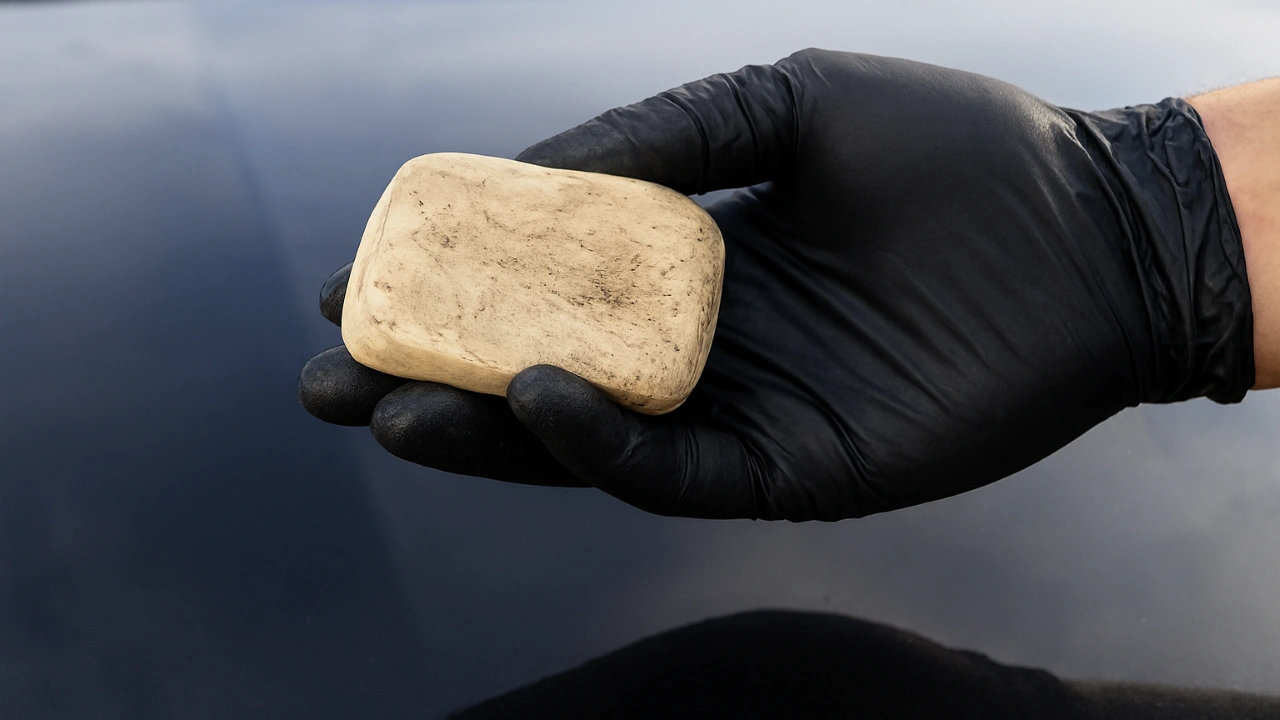
Not all clay bars are created equal. Some absorb dirt better than others, and some are too stiff to mold properly. For beginners, we recommend the Ardex light-grade clay bar — it’s easy to shape, effective at grabbing contaminants, and forgiving on paint.
🔸Quick test for clay bar quality:
- A good clay bar should fold easily and reshape into a smooth ball.
- If it’s too stiff, warm it up slightly and try again.
- If it crumbles or resists molding, toss it — it’s not safe for paint.
🔹How to Clay Bar a Car Without Damaging the Paint — Wash First
Before clay barring, wash the car thoroughly to remove loose dirt. This minimizes the risk of dragging grit across the paint. Use a soap with good lubricity — baby shampoo works well for slip without residue. Avoid dish soaps like Dawn unless you’re stripping wax and know how to manage drag.
🔸Pro tip:
- Tear the clay bar into two halves. This will give you a 100% fresh clay bar if you need it.
- Mix at least 10ml of baby shampoo with water in a spray bottle for a slick clay lubricant.
- The more soap used, the more slippery and sudsy the solution
- Spray generously — the more lubrication, the less friction and risk of scratching.
Internal Links: → Explore our car washing guide for safe washing tips
🔹How to Clay Bar Safely
This safe clay bar technique for cars helps reduce friction and prevent micro-marring during decontamination. If you’re still unsure how to clay bar a car without damaging the paint, this next section breaks it down step by step. Before you touch the paint, rinse off loose debris. This step is critical — even small particles can cause scratches during the contact wash.
- Work panel by panel — start with the hood.
- Spray clay lubricant until it runs off the surface.
- Continually rinse & check the clay bar for hard contaminants.
- Kneed the clay as needed to swallow up dirt that won’t rinse out.
- Wet your hand and the clay bar.
- Slide the clay bar along the surface of the paint. Rub in straight lines, not circles.
- Keep the clay moving — if it sticks or skips, add more lubricant.
- “Always” listen and feel through the rub if a hard particle is caught up and scratching.
- Never reuse dropped clay unless u can thoroughly rinse and kneed it back to health.
- Cut small pieces and discard used portions.
Time estimate: 1–2 hours for a full vehicle, including glass and trim.
🔹Common Mistakes to Avoid
These mistakes often happen when skipping a safe clay bar technique for cars — especially on dry or unwashed surfaces. If you’re learning how to wash a car without damaging the paint, clay barring is a key step before ceramic coating or polishing. It removes embedded contaminants that washing can’t reach — but if done improperly, it can scratch the paint. Always follow with polishing to restore a smooth finish.
- Using dry clay: Always keep it wet and lubricated.
- Circular rubbing: Increases risk of swirl marks.
- Skipping the wash: Clay can’t replace proper washing.
- Skipping the first step of washing the car after you have completed a clay bar method.
- Leaving water drops after: Always dry the car fully — leftover water anywhere on the paint can cause mineral-based water spots.
Internal Links: → Explore our scratch removal guide for finish-safe correction → Explore our buffing vs polishing guide to understand paint correction → Explore our paint correction showcase in action for proof
🔹Wash, Dry, and Polish
Once the entire car is clayed, wash it again to remove residue. Dry thoroughly with microfiber towels. Then polish to remove any fine scratches and prep the surface for wax or ceramic coating.
Summary
Every step above is part of a safe clay bar technique for cars designed to protect paint and prep for detailing.
By following these steps, you’ll know exactly how to clay bar a car without damaging the paint, preserving your finish and prepping for protection. Clay barring your car isn’t just about shine — it’s about protection. A proper clay bar technique helps preserve your paint, prevent embedded damage, and prep the surface for deeper detailing steps like polishing or ceramic coating. This guide explains how to clay bar a car safely without causing scratches, with emphasis on avoiding scratches and swirl marks.
This scratch-free clay bar method is ideal for beginners and pros alike — minimizing risk while maximizing results.
Additional Internal links:
- This guide is part of our Auto Detailing Resource Hub — explore more prep and protection tips.
- Learn more about Auto Detailing on our main service page — see how the process works from start to finish.
- Have more questions? Visit our Auto Detailing FAQ for quick, clear answers.