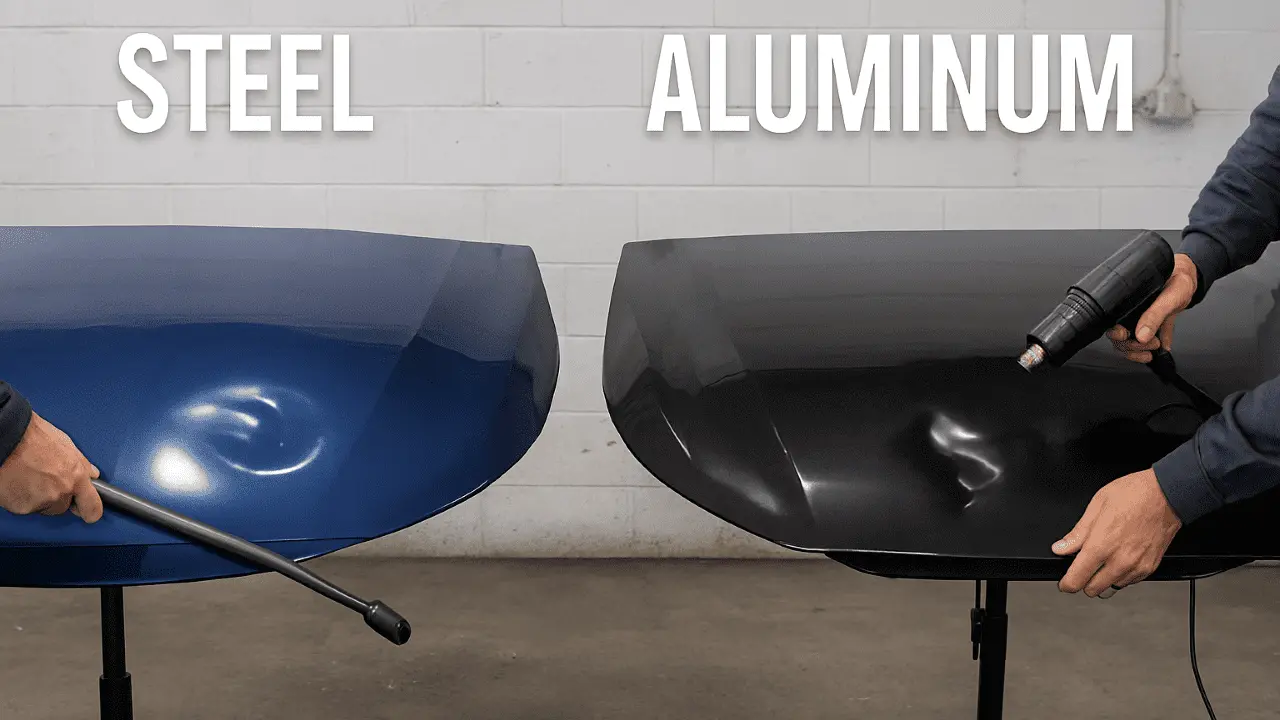
Can PDR Fix Aluminum Panels?
Aluminum panels can be repaired with paintless dent repair, but the process is more demanding than steel. Aluminum is rigid, heat‑sensitive, and prone to spring‑back, which means successful repairs require controlled heat, specialized tools, and advanced technique. This guide explains when PDR works on aluminum — and when the metal’s limits make a traditional repair necessary.
🔹 Why Material Matters in Dent Repair
Steel and aluminum behave very differently under pressure — literally. Their molecular structure, flexibility, and heat response all affect how a dent can be accessed, manipulated, and restored. Understanding these differences helps customers make smarter decisions and avoid costly mistakes.
🔸Quick Comparison Table:
| Property | Steel Panels | Aluminum Panels |
|---|---|---|
| Flexibility | Moderate | Low (more rigid) |
| Heat Sensitivity | Low | High |
| Tool Response | Predictable | Requires finesse |
| Common in Vehicles | Most sedans/SUVs | Trucks, luxury, EVs |
Internal links: → Start with how PDR works — then explore your repair choices
🔹 Challenges of Aluminum Dent Removal
Aluminum panels present unique challenges that many technicians — and body shops — aren’t equipped to handle. From heat sensitivity to spring-back resistance, aluminum demands specialized tools and a deeper understanding of material behavior.
🔸Key Challenges:
- 🔧 Requires non-magnetic tools and softer tip materials
- 🔥 Sensitive to heat buildup during repair
- 🌀 Higher spring-back effect makes dents harder to stabilize
- 🚫 Limited access in double-panel areas
Internal links: → Learn why DIY dent repair often makes things worse
🔹 Why Steel Is Still the PDR Standard
Steel remains the most common material in automotive construction, and it’s generally more forgiving during dent repair. That doesn’t mean it’s easy — but it does mean most technicians are trained to handle it.
🔸Advantages of Steel Panels:
- Easier to manipulate with standard PDR tools
- More predictable dent behavior
- Lower risk of paint damage during repair
- Widely used across makes and models
🔹 Real-World Examples: How Material Affects Repair Strategy
From luxury EVs with aluminum hoods to work trucks with steel beds, the type of metal beneath the paint directly impacts how a dent is approached. Each material presents unique challenges that influence tool selection, access strategy, and repair time. Understanding these differences helps set realistic expectations for both technicians and vehicle owners.
🔸Example Scenarios:
- Tesla Model S hood (aluminum): No glue pulling and needs precise heat control to avoid paint damage or warping.
- Ford F-150 door (aluminum): Limited backside access and high spring-back resistance demand advanced technique and superior tool control.
- Honda Accord quarter panel (steel): Ideal for traditional rod-based PDR due to predictable metal memory and accessible bracing. Glue Pulling to aid repair is an option.
🔹 What to Ask Your Technician Before a Repair
Not all dent repair technicians are equipped — or trained — to handle aluminum panels. And not every shop will disclose those limitations upfront. Before committing to a repair, ask the right questions to ensure your vehicle is in capable hands.
🔸Checklist:
- ✅ Do you have aluminum-specific tools and training?
- ✅ Have you repaired this make and model before?
- ✅ Will heat be used during the repair, and how is it controlled?
- ✅ Can you explain the risks of spring-back or paint damage with this material?
Internal links: → Finding the right PDR business guide – Explore our expert guide to help you make the right choice
Summary
Whether your vehicle is built with steel, aluminum, or a combination of both, successful dent repair depends on more than just tools — it requires experience, material awareness, and a commitment to doing things right. Paintless dent repair isn’t a magic trick. It’s a craft rooted in physics, patience, and precision. And when it comes to aluminum, there’s no room for shortcuts. Aluminum panels require more finesse and patience than steel, especially when using glue pull techniques — as explained in this in-depth comparison of aluminum vs steel in PDR
.
Additional Internal links:
- This guide is part of our Paintless Dent Repair Resource Hub — explore more prep and protection tips.
- Learn more about Paintless Dent Repair on our main service page — see how the process works from start to finish.
- Have more questions? Visit our Paintless Dent Repair FAQ for quick, clear answer